Turning sustainability into product: TECFYS' Ecopoints system
TECFYS sells and rents refurbished technology, and its whole value proposition revolves around sustainability. The brief was to redesign the platform so the circular economy stopped being a message and became a mechanism — something the user does, that gets rewarded and that can be measured.
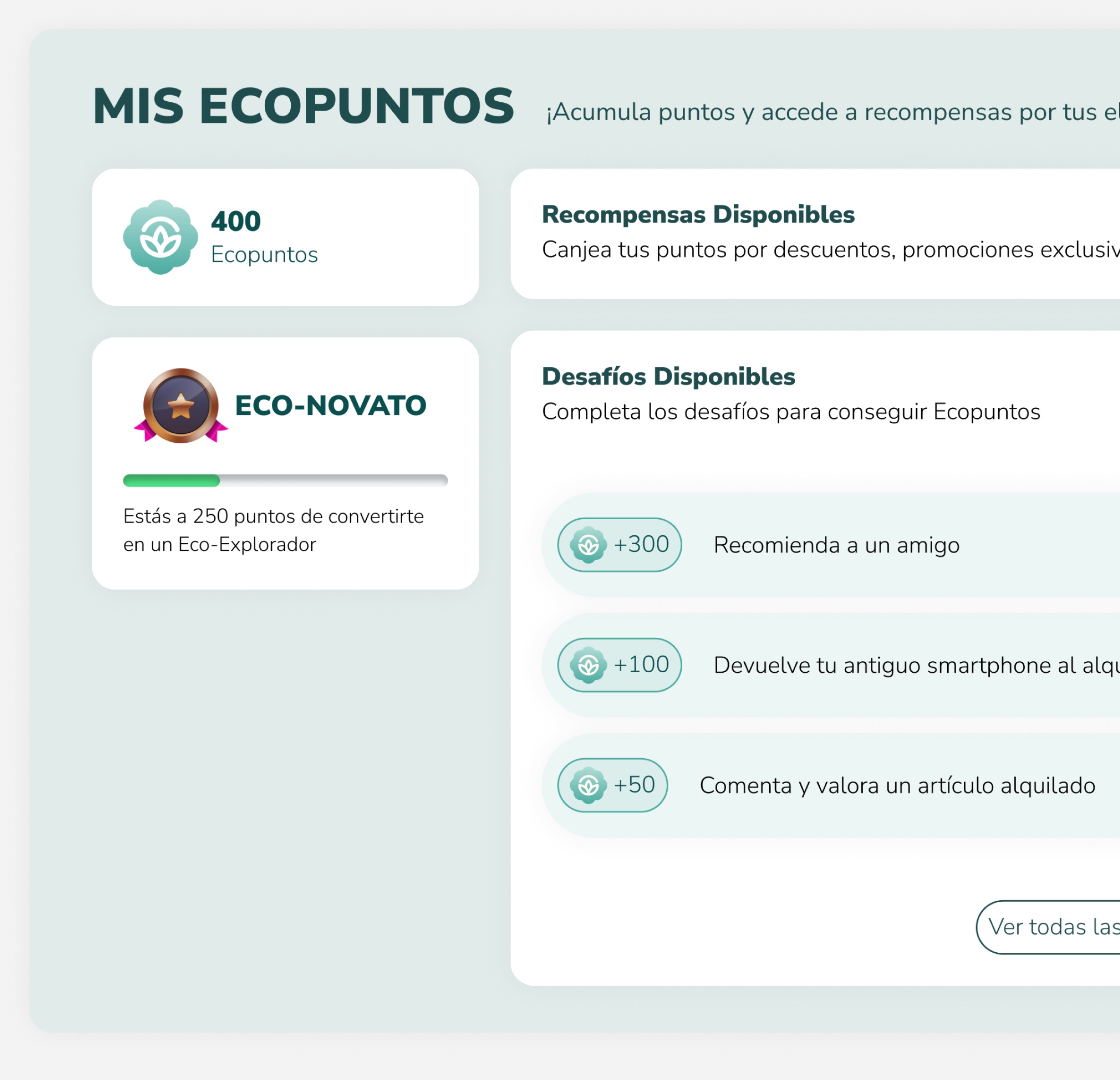
Context
The brief was to redesign the platform, and it came with four very concrete goals. But they all shared the same underlying risk — that sustainability would stay in the messaging and never reach the user's behaviour.
The four goals in the brief
- Gamification and dynamic pricing to motivate the circular economy and encourage competition based on the environmental impact of every tech decision.
- Recommend the best-fitting device — refurbished units in excellent condition and with a good energy rating.
- Simple, clear metrics on the impact of the electronic waste we generate.
- Preventive and predictive maintenance to extend the useful life of devices, reporting the CO₂ impact of each action.
So I didn't ask myself how to make it prettier. I asked something else — how to make the circular economy something the user does, not something they read.
The decision: an incentive system, not a banner
The four goals all pointed to the same place — changing behaviours. And behaviours aren't changed with copy. They're changed with incentives.
That's where Ecopoints came from —a product decision of mine to fulfil the brief—: a behaviour currency that rewards every sustainable choice and turns it into visible progress, benefits and real savings. Each business goal became a concrete mechanism:
- Gamification and dynamic pricing → levels, challenges and a dynamic redemption: the higher your level, the fewer points the same discount costs.
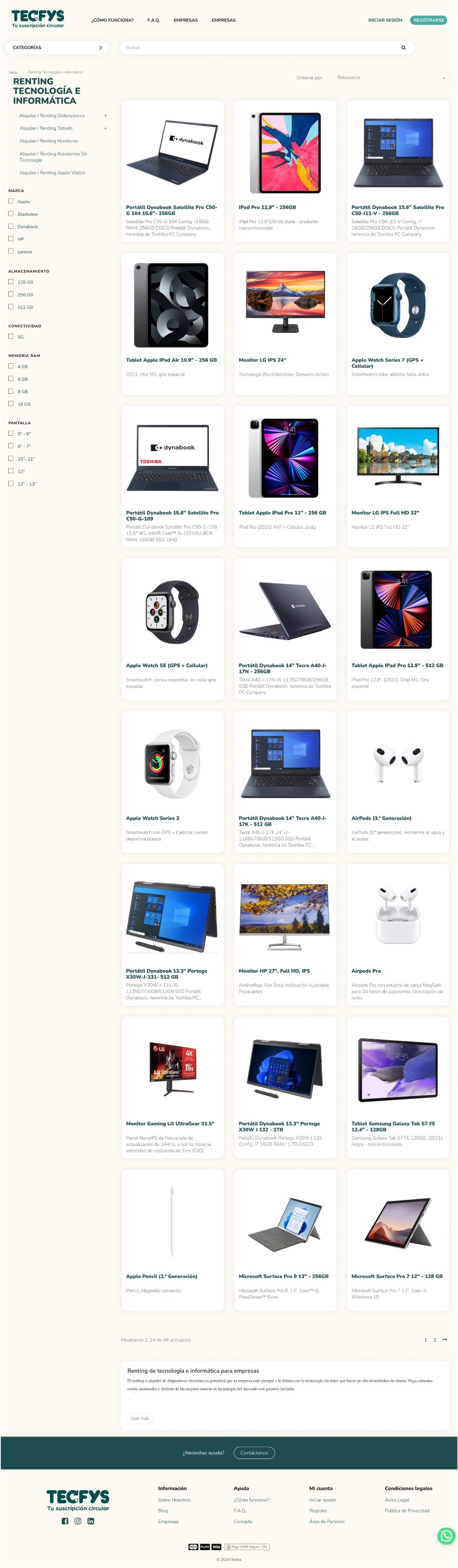
- Recommend the best-fitting device → the energy rating and the refurbished condition as a first-order criterion in the listing.
- Simple impact metrics → the CO₂ avoided and the electronic waste generated, visible in the product and in the profile.
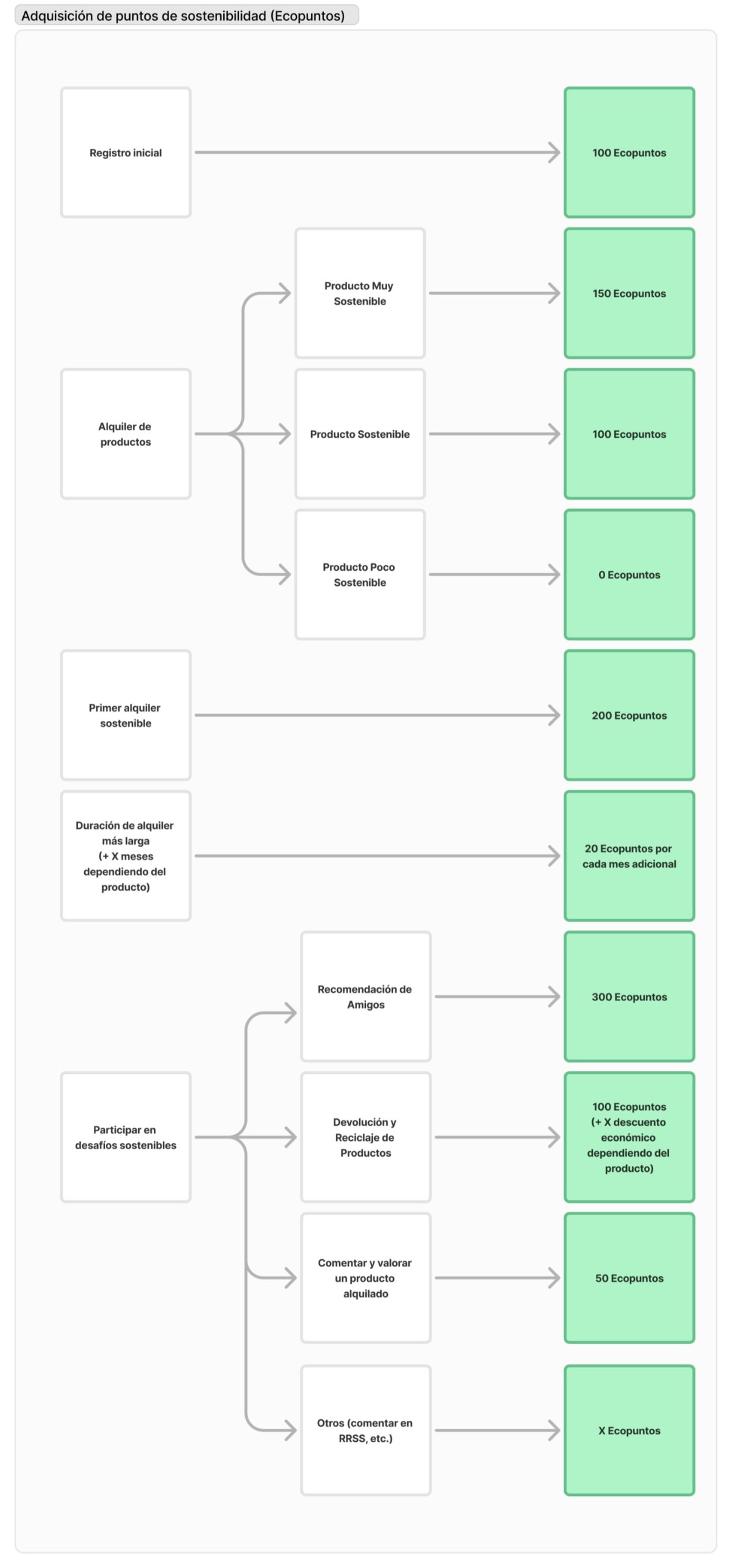
- Preventive maintenance → maintenance challenges and a recycling programme: bring your old phone and get 100 Ecopoints.
And I tied it to four business levers —promote sustainability, retain users, increase transactions and customer lifetime value, and drive the desired behaviour— so the gamification wasn't a green ornament but a business engine.
Ecopoints: how it works
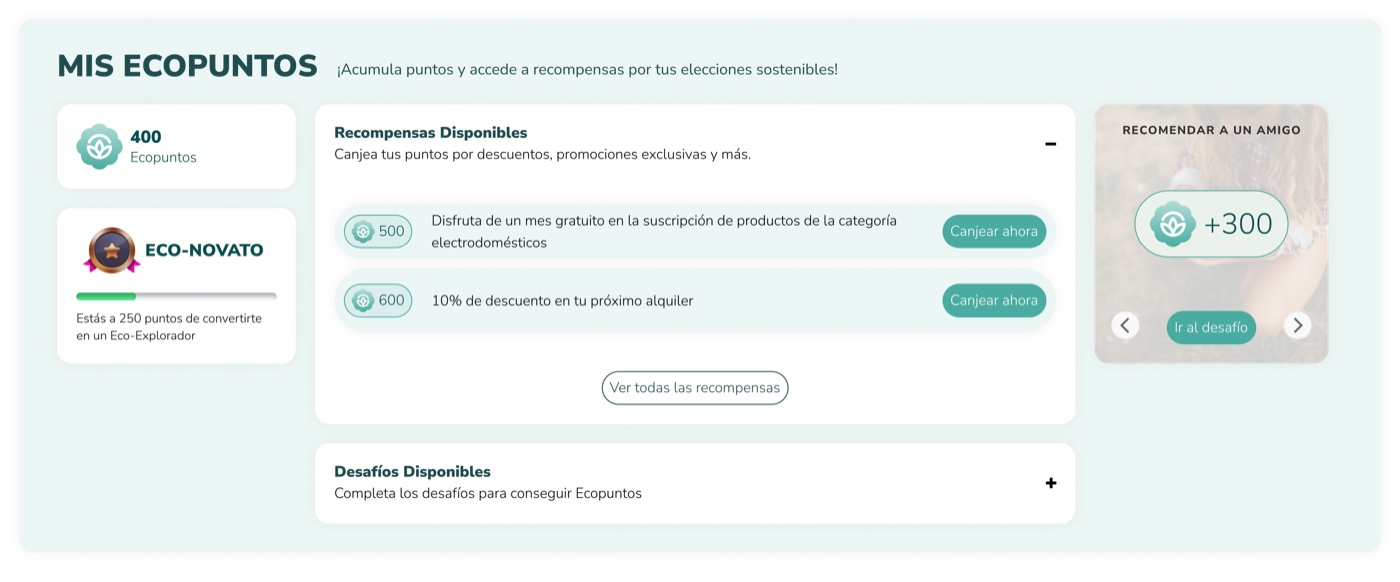
The user earns Ecopoints for sustainable actions —recommending a friend, returning their old smartphone when renting a new one, rating an item they've already bought— and levels up along the way.
There are three levels —Eco-novice, Eco-explorer and Eco-expert— and each one unlocks more: early access to refurbished units, donations to environmental causes, events and an ever-cheaper redemption. That's the dynamic-pricing piece: the same 10% discount costs 600 points as a novice and 200 as an expert. The more sustainable you are, the more the system rewards you.
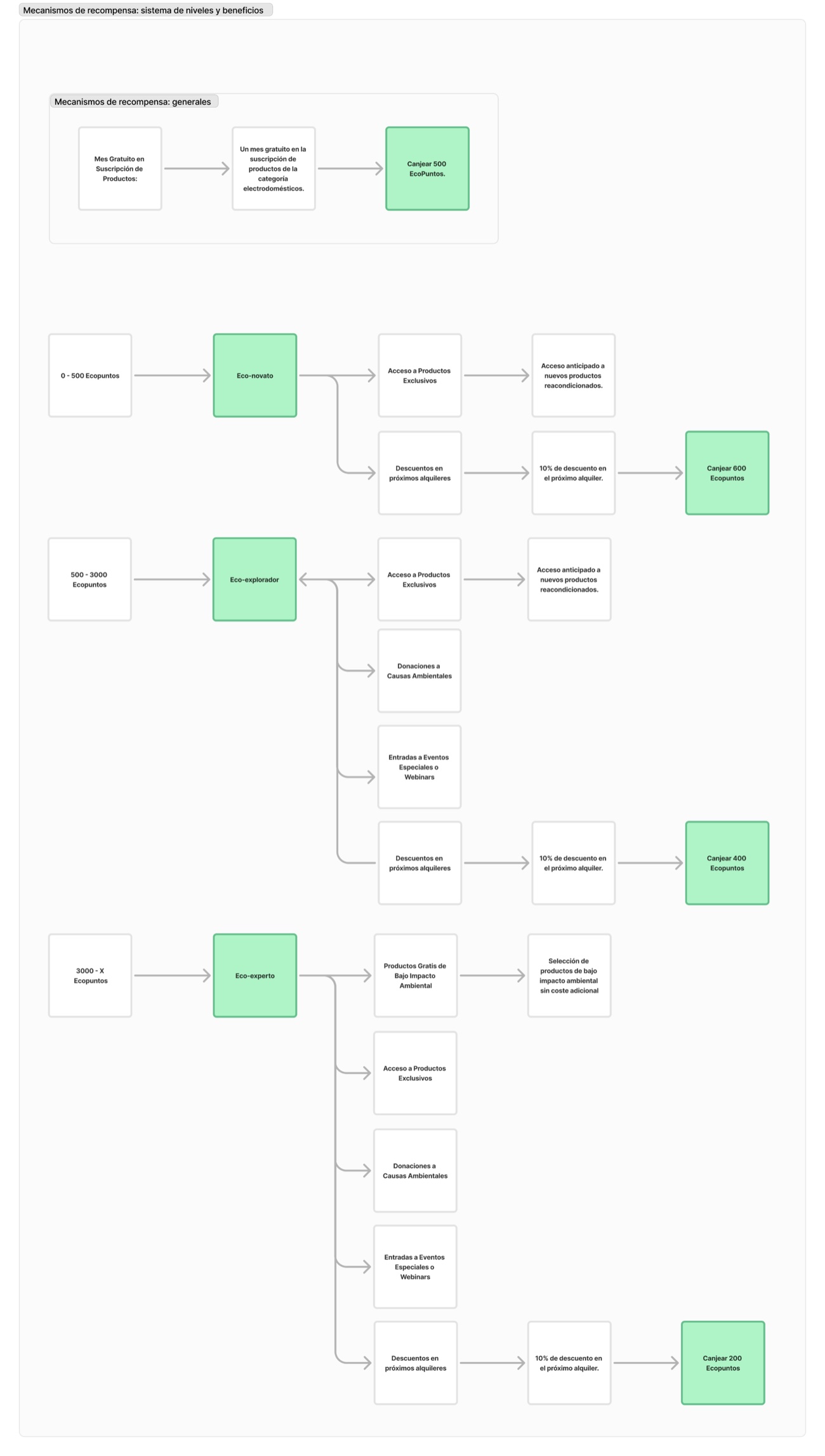
And the points are redeemed for rewards aligned with the business model itself —a free month of subscription, discounts on the rental, donations—, closing the loop between sustainability, retention and customer lifetime value.
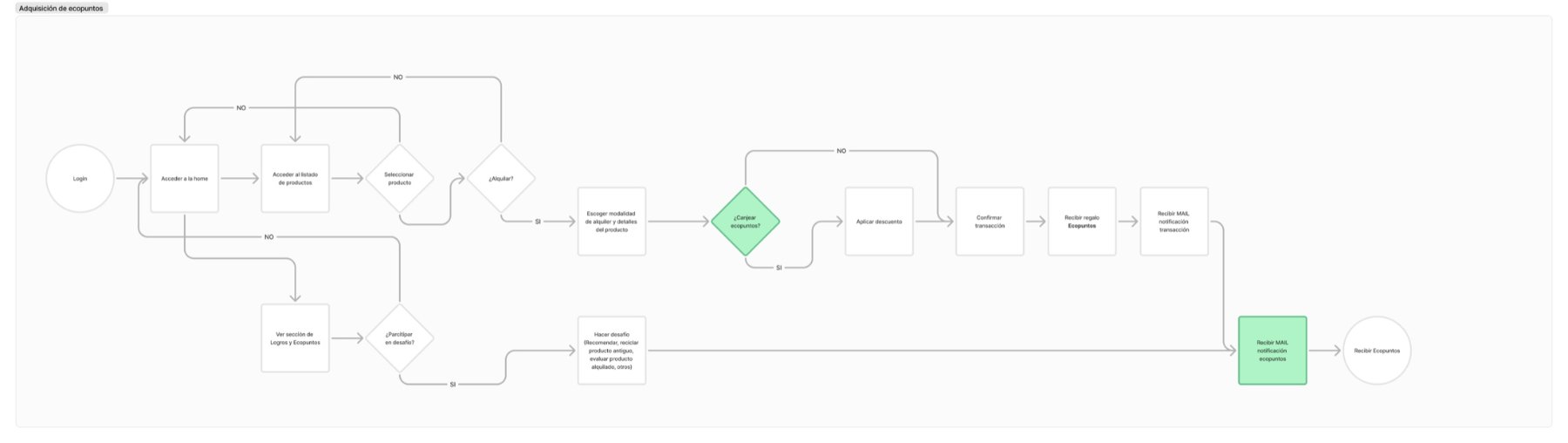
Behind the mechanics there's an end-to-end user flow —from login to redemption and notification— so that earning and spending Ecopoints wasn't an add-on but a natural part of the journey.
The platform redesign
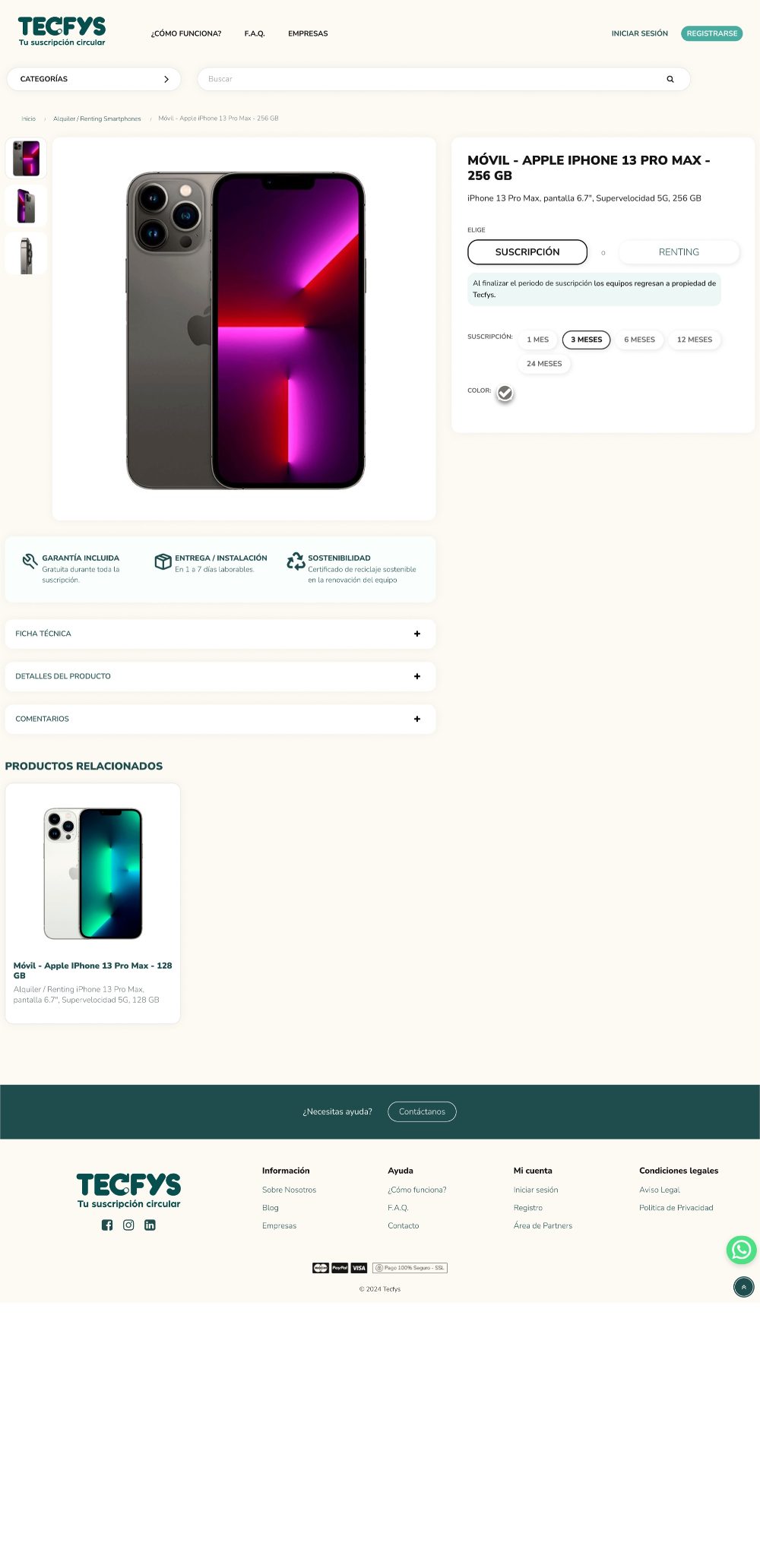
With the system defined, I integrated it into the three views that weigh most on the decision: home, listing and detail. The sustainability layer, the Ecopoints and the impact metrics weren't bolted on top — they were woven into the flow the user was already walking through.
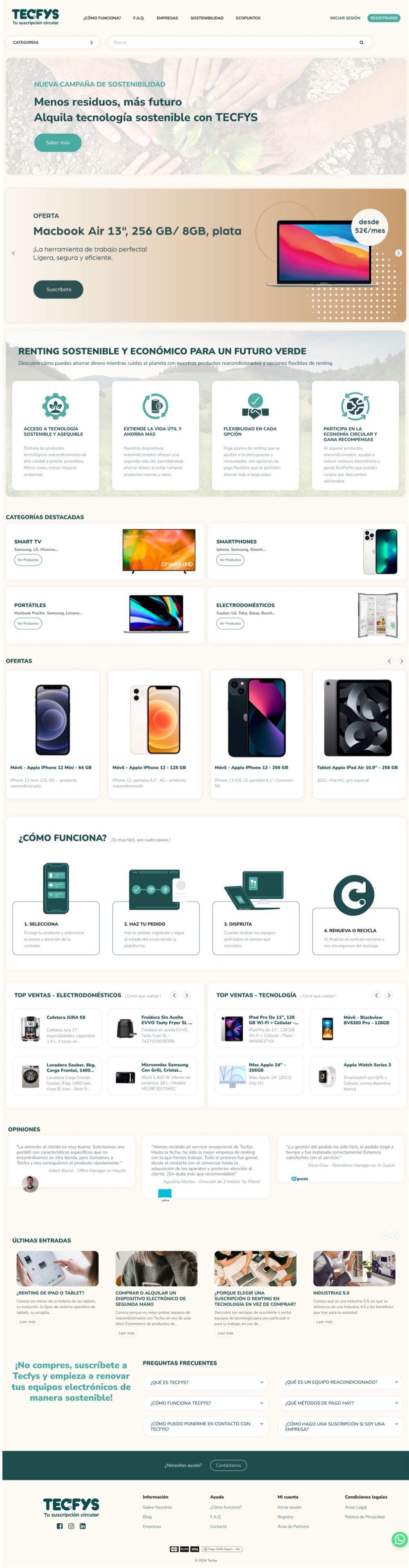 Después
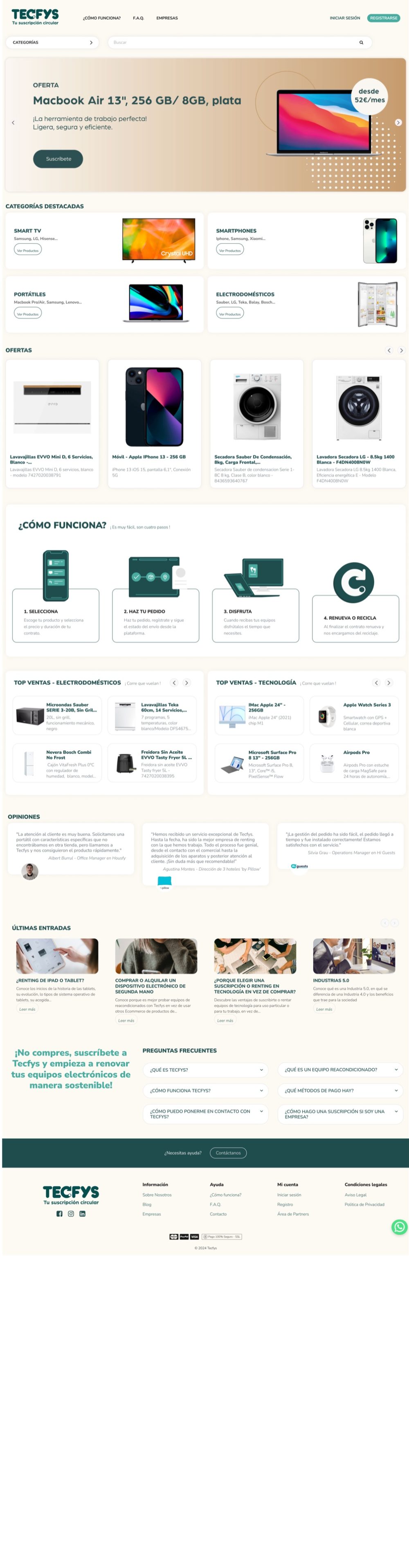 Antes
Antes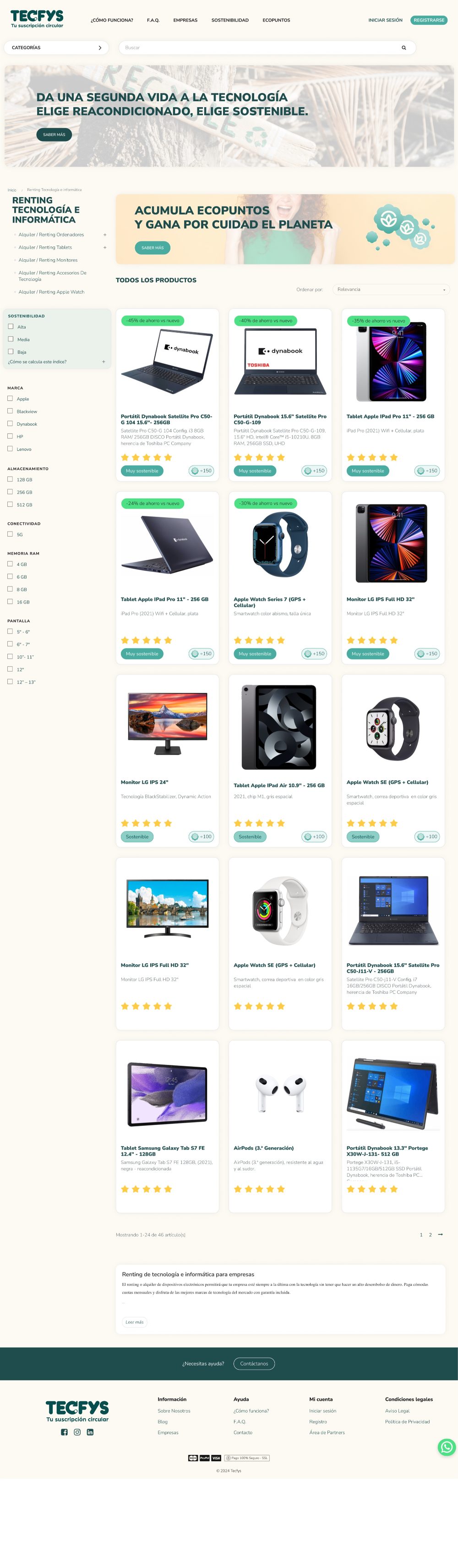 Después
 Antes
Antes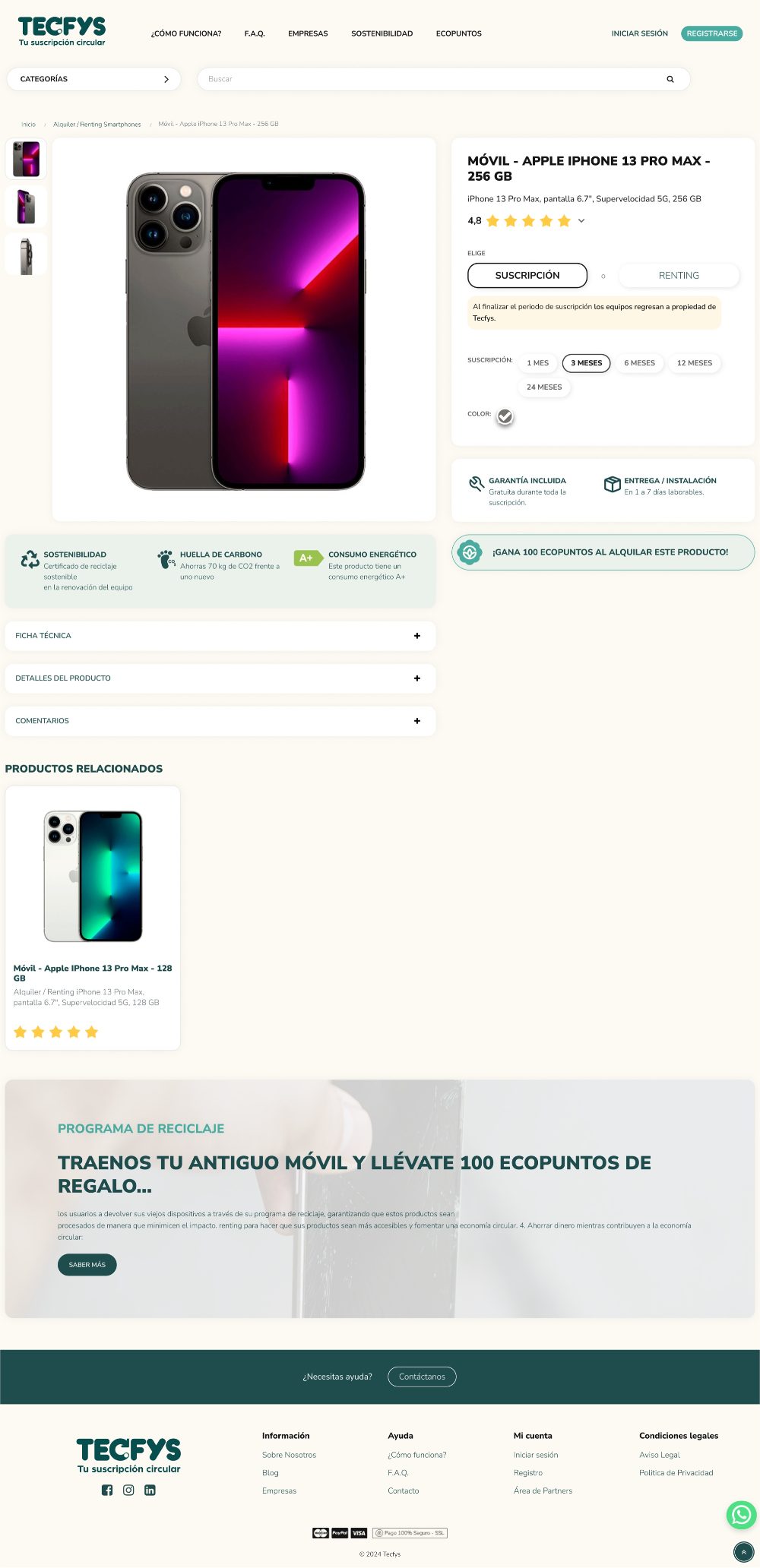 Después
 Antes
AntesThe reframing
The brief asked to raise awareness about sustainability. The product decision was the opposite — not to ask the user to become aware, but to design a system in which the sustainable option was also the most convenient one.
Design note