TL;DR
The real estate market generates a massive volume of unstructured information (news, articles), making it impossible to query systematically for investment decisions.
Summary
The main challenge was to turn this noisy stream into a structured, actionable transaction database. My role was to design and implement an end-to-end AI solution, identifying Large Language Models (LLMs) as the most viable approach.
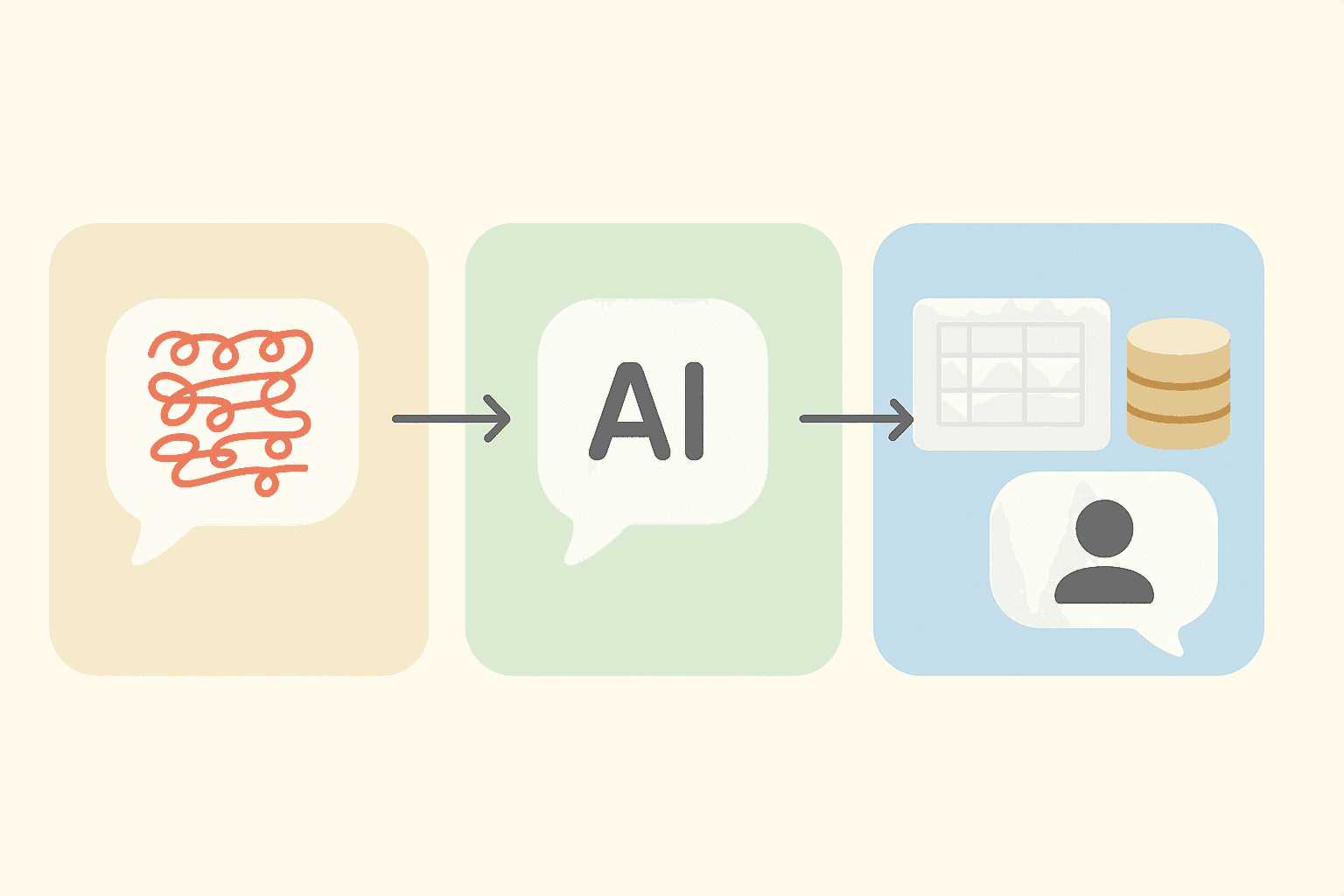
I led the design of an automated pipeline that classifies, extracts and validates data from news articles, while overcoming the cost and consistency limitations of LLMs.
Key decisions included a dual-model system to optimise costs, a modular prompt architecture to improve reliability, and a normalized data model designed together with the Data team. The result was a complete transformation of the company's market-intelligence workflow, turning scattered news into a strategic data asset.
Client
A European real-estate investment firm focused on income-generating assets in major city centres. Their edge comes from spotting opportunities early and understanding how other players move in the market.
The opportunity
Most of the information they relied on was already public — but locked inside hundreds of news articles. Analysts were copy-pasting data into spreadsheets by hand: slow, error-prone, and impossible to scale.
My Role
My job was to answer a simple but ambitious question:
Can we turn messy news articles into a structured transaction database – and plug it into an AI assistant for investors?
I acted as AI Solution Designer + Technical Implementer:
- Chose LLMs as the core technology and validated their feasibility for this use case.
- Designed the end-to-end pipeline: from raw news → classification → structured JSON → normalized database.
- Created and iterated the prompting system and the data model together with the Data Engineering team.
- Optimised the solution for cost, reliability and scale, not just "cool AI demo value".
The Problem
Client's analysts needed:
- A transaction portfolio they could query by buyer, seller, asset type, area, amount, date…
- A way to see patterns: who is buying what, where, and when.
But the raw input was:
- Hundreds of unstructured news articles per week
- Different sources, styles and levels of detail
- Too much noise (corporate PR, irrelevant news, appointments, etc.)
So the real design problem was:
How do we turn a chaotic news feed into a reliable, structured and affordable data product?
The Solution
We framed a hypothesis:
If we build an automated pipeline using LLMs to read, classify and structure key entities from news (buyers, sellers, assets, amounts), then our Client will gain a scalable transaction dataset, unlock new analytics, and feed an AI assistant with real market context.
Success would look like:
- A big jump in structured records
- A sharp drop in cost per article
- Analysts using an interactive chat to ask complex questions that were impossible before

From "one big prompt" to a smart pipeline
The first instinct was to build a "magic prompt" that did everything at once. It failed: fragile, expensive, hard to debug.
The breakthrough came when I treated prompting as system design, not copywriting.
Key design decisions
1. Two-stage model strategy
- Stage 1: a lightweight, cheap LLM filters and classifies articles. Most are discarded as noise.
- Stage 2: only the transactional ones go to a more powerful model that extracts structured data.
→ Result: about 70% cost reduction without losing coverage.
2. Modular prompt chain
- One prompt for classification
- One for entity extraction
- One for validation and normalization
→ Easier to tune, test and maintain than a single "god prompt".
3. Simplified, normalized data model
- Instead of one huge JSON, we designed a relational schema: News, Parties, Assets, Locations and a join table for roles.
- The LLM outputs a clean, minimal JSON that is then broken down into tables.
→ More robust imports, fewer nulls, and a scalable base for APIs and the chat assistant.

Outcomes
- +1600% growth in structured transaction records.
- -70% cost per processed article thanks to the dual-model pipeline.
- A new internal data asset that powers dashboards, research and future products.
For users
- Analysts moved from searching and reading news for days to asking questions in natural language like:
"Which funds bought logistics assets over 5,000 m² in the last quarter?"
- Answers now come in minutes, backed by structured data instead of gut feeling.
For the product roadmap
This dataset became the foundation for:
- An AI market-intelligence chat for internal teams and clients
- New analytics features and alert systems
- Future extensions (financing details, risk signals, trend summaries, etc.)