Link-in-Bio as the growth engine of vertical platforms
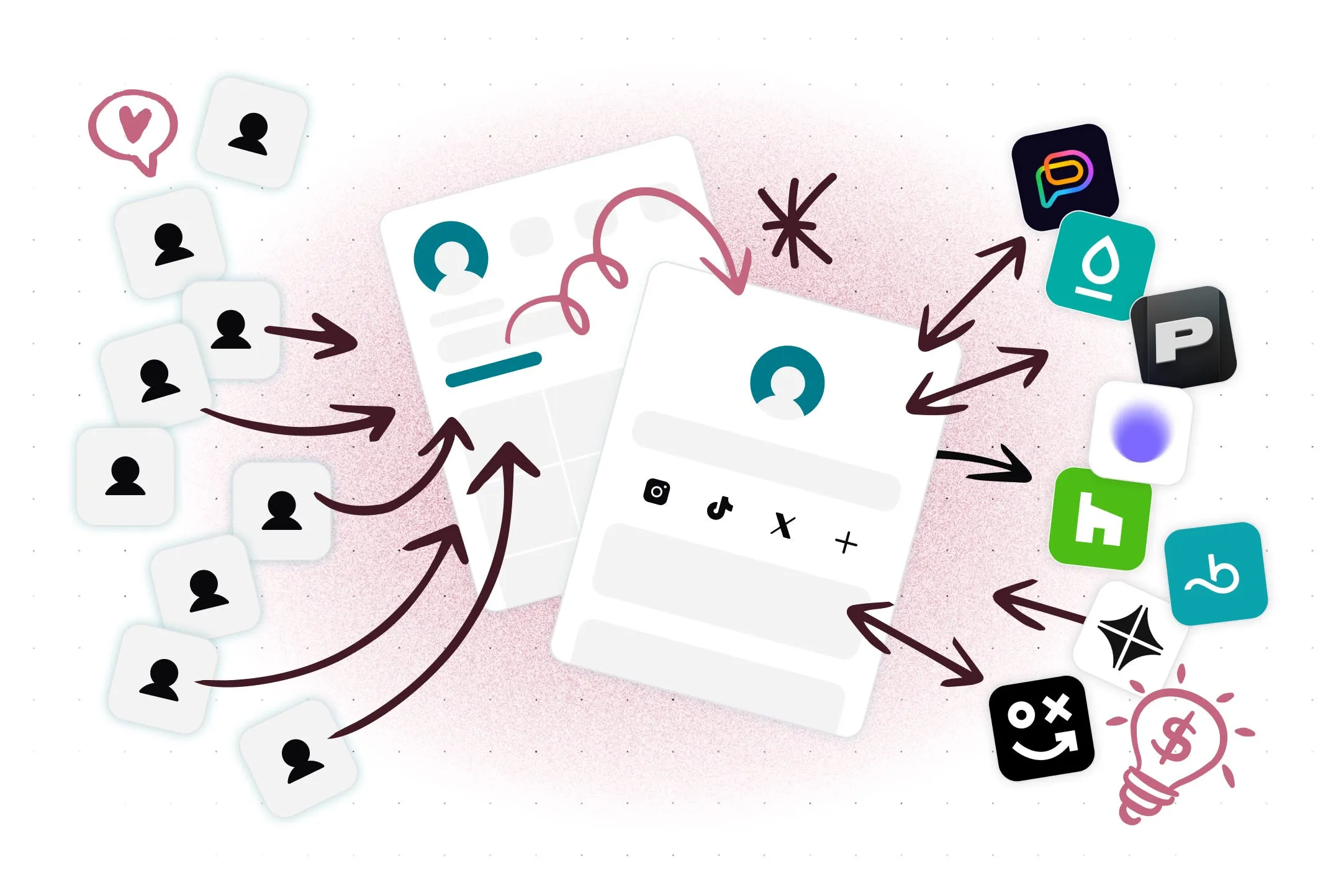
There’s a widespread belief that launching a platform for a mass market (SaaS or marketplace) requires an enormous marketing spend in order to reach the critical mass needed to make the model profitable.
But the reality is that, over the last few years, many of the most successful B2C and B2B2C vertical models have managed to grow with an organic strategy: leveraging horizontal networks (Instagram, TikTok, X…) as a discovery layer.
This article analyses several vertical businesses (SaaS and marketplaces) that have turned creators’ link-in-bio into their main distribution channel. Cases like Gronda, Contra, Playbook, Pensight and Prozis show that you don’t need to spend millions on Ads if you align product, incentives and distribution well.
What a vertical platform really is
We all know Instagram and TikTok are the kings of today’s attention economy, but their generalist structure prevents them from offering real business solutions (managing operations, validating professional skills or closing complex transactions). That’s where vertical networks and platforms come in: solutions designed to solve the specific problems of a particular niche.
Today’s vertical models combine, depending on their users’ needs, three distinct layers:
1. Vertical SaaS (the tool). Digitises the professional (calendars, management). It’s their “operating system”: software that solves the how. Its value lies in operational efficiency.
2. Marketplace (the transaction). Brings in customers and liquidity. It solves the to whom. It connects supply and demand within the niche. Its value lies in the sale.
3. Vertical Social Network (the status). Grants validation and credibility. It solves the who. Its value lies in reputation and visibility.
The real hack: creator-led distribution
How do these platforms reach a base of millions of users without massive marketing capital?
Creator-led distribution is a growth method whereby a niche creator or professional becomes a distribution node—through incentives—drawing on their own audience on horizontal networks.
- Horizontal networks (Instagram, TikTok, LinkedIn, etc.) → generate discovery and desire.
- Vertical platforms → turn that attention into business.
The link-in-bio is the great bottleneck of the conversion funnel that this strategy relies on in its social dimension. Horizontal networks, designed so you never leave them, have only this single escape hatch. The optimal strategy is to align the professional’s interests (monetisation, status, operational efficiency) with the product’s; offering them a microsite they can publish in their bio link and letting them channel their audience (high-intent, pre-qualified users) toward their own space. This translates into a very low CAC and a much higher conversion rate than any other existing marketing strategy.
The most refined or trendy form of this model would be Creator-Led Growth (CLG): creators don’t just distribute products, they drive growth by co-creating the brand’s reputation and the product’s own ecosystem. Their content is the product’s content, generating a symbiosis or positive feedback loop in which both sides (product/community and individual professional) gain reputation and validation, building trust and sustained engagement over the long term.
Most of the models we’ll analyse below use a strategy closer to a CLG model than to mere creator-led distribution, especially since they are complex solutions where community, operations and transactions coexist. In any case, the name we give it isn’t what matters.
The most basic model: B2C strategies
Creator-led distribution for B2C businesses has been exploited for decades, mostly through affiliate programs. In these models, professionals and creators incentivise their audience to buy through trackable links in exchange for a commission on sales. The most paradigmatic example of this, across all its forms and digital channels, is probably Amazon. Affiliate programs are today one of the main—if not the largest—monetisation channels in the Creator Economy of social networks (the main one for around 31% of creators).
If the system is channelled through social networks, the link-in-bio remains the key axis of the funnel. Leveraging the infrastructure of large platforms like TikTok, mainstream cultural and digital-consumption habits, and offering a simple link on profiles that act as attention magnets for the target audience is tremendously simple and effective for minimising acquisition cost and increasing loyalty and conversion.
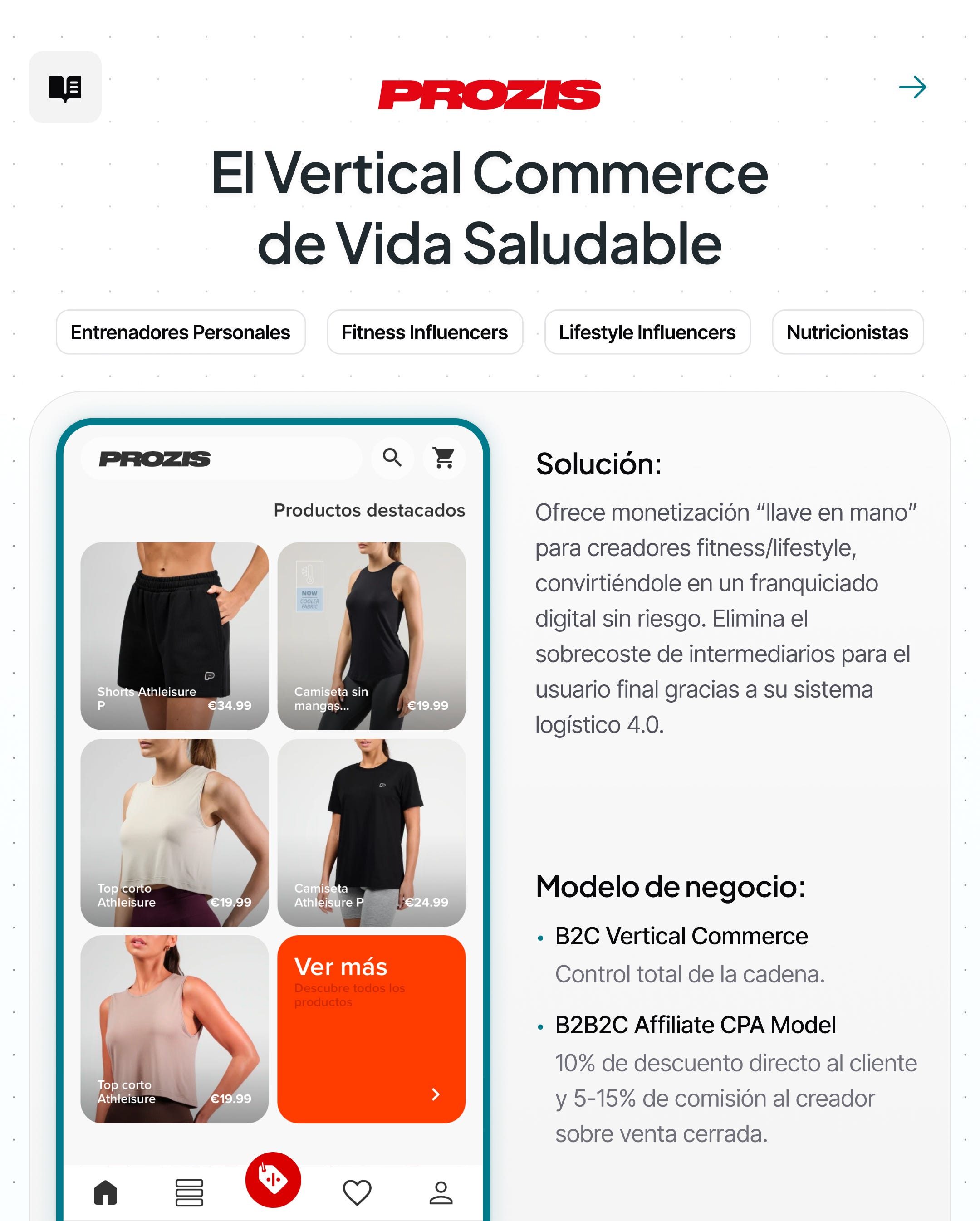
My favourite example is Prozis, an aggressively mobile-first nutrition and supplements e-commerce that has gone viral quickly with a large network of brand ambassadors and affiliate marketing. Unlike the examples we’ll see later, Prozis doesn’t offer the influencer their own profile within its ecosystem—just a generic interface prioritising the products the influencer earns a commission on.
The refined version: B2B2C strategies
The growth model based on creator-led distribution or Creator-Led Growth becomes noticeably more tangible in systems that offer standardised solutions for professionals within the same vertical (B2B2C).
These models can be divided according to how they combine the functionalities of SaaS, marketplaces or social networks. Let’s look at the three dominant archetypes:
1. Full hybrids: community + management + sales
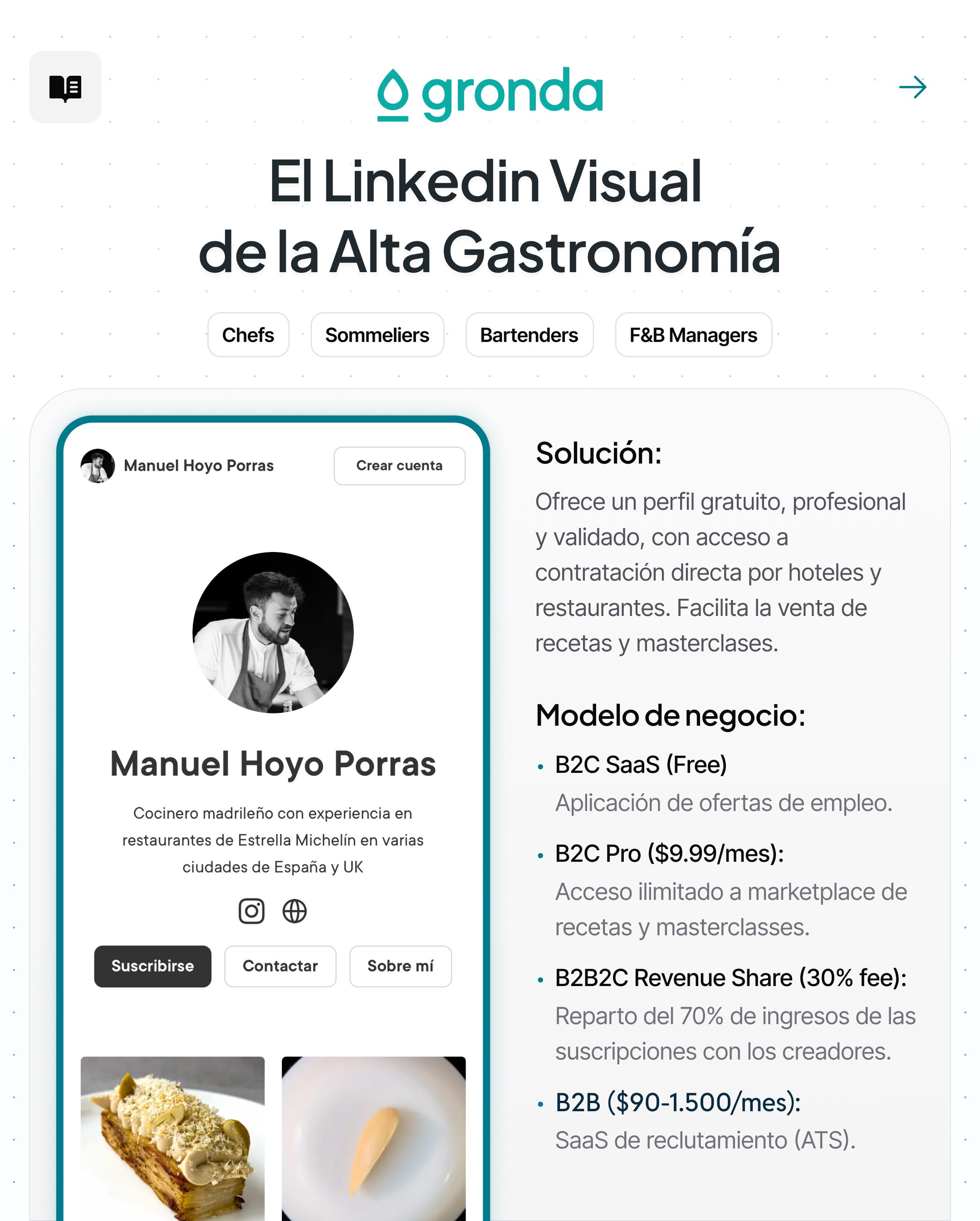
These are the ecosystems that—probably due to the specific conditions of their niche—offer the most complex solutions. A great example is Gronda: the community that validates chefs’ quality and turns them into small content producers.
- It’s a VSN (vertical social network): you come in for the “food porn” and the validation among chefs and industry members.
- It’s SaaS: you stay because you save recipes, find jobs, manage bookings or analyse your traffic.
- It’s a Marketplace: it monetises by charging for unlocked recipes or charging luxury hotels for recruitment.
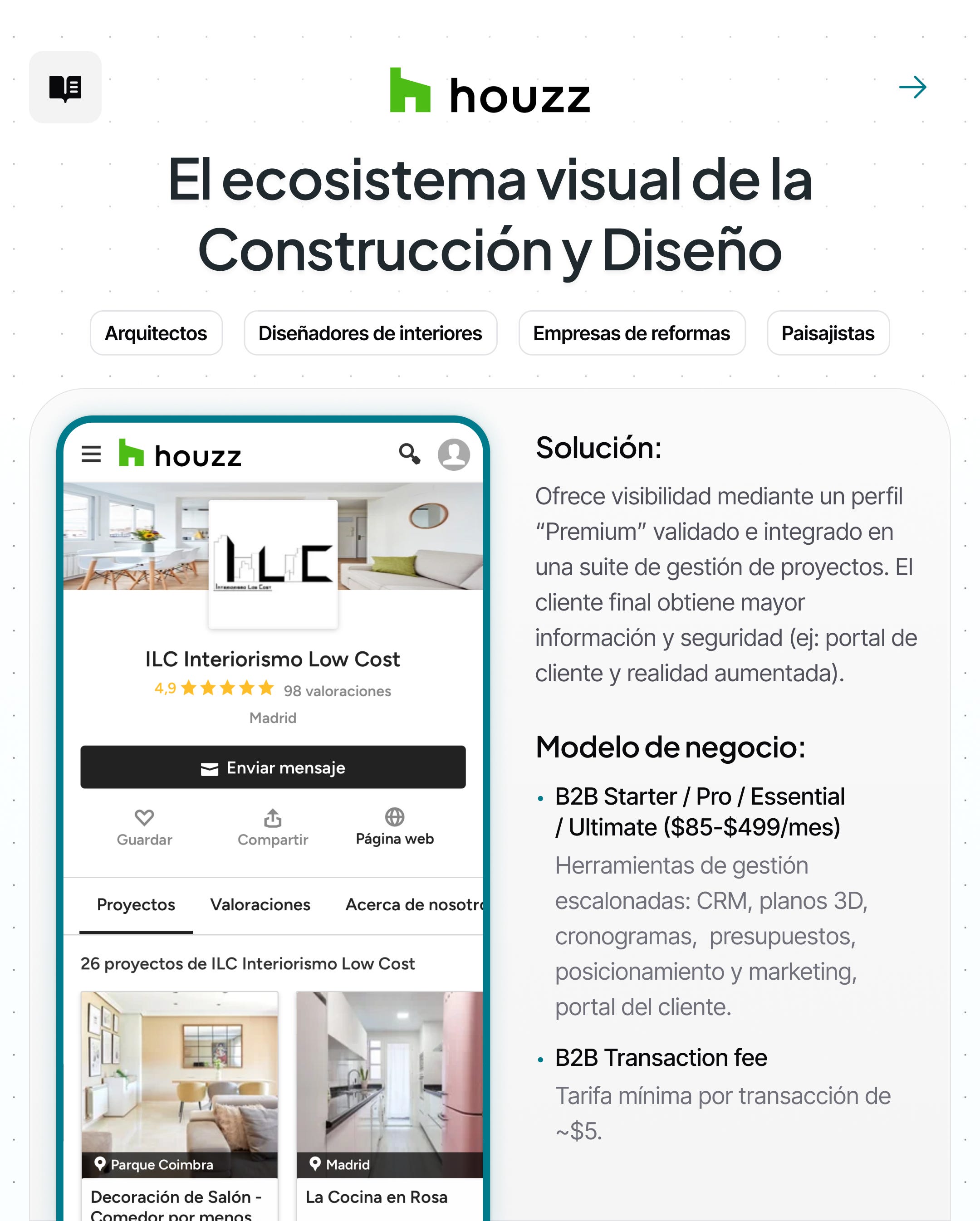
Although it’s not a paradigmatic example of CLG or creator-led distribution, Houzz meets all the characteristics to be mentioned here. It started as home inspiration and now manages everything from 3D plans to invoices, acting as a closed ecosystem for architects/renovation companies and their clients. All of it actionable through a premium microsite that replaces the traditional website and simplifies the process for its users.
2. Identity infrastructures: “I am my company”
Another model consists of platforms specific to creators whose business or market is mainly circumscribed to the digital ecosystem and not outside it (as was the case with the chefs and architects in the previous examples).
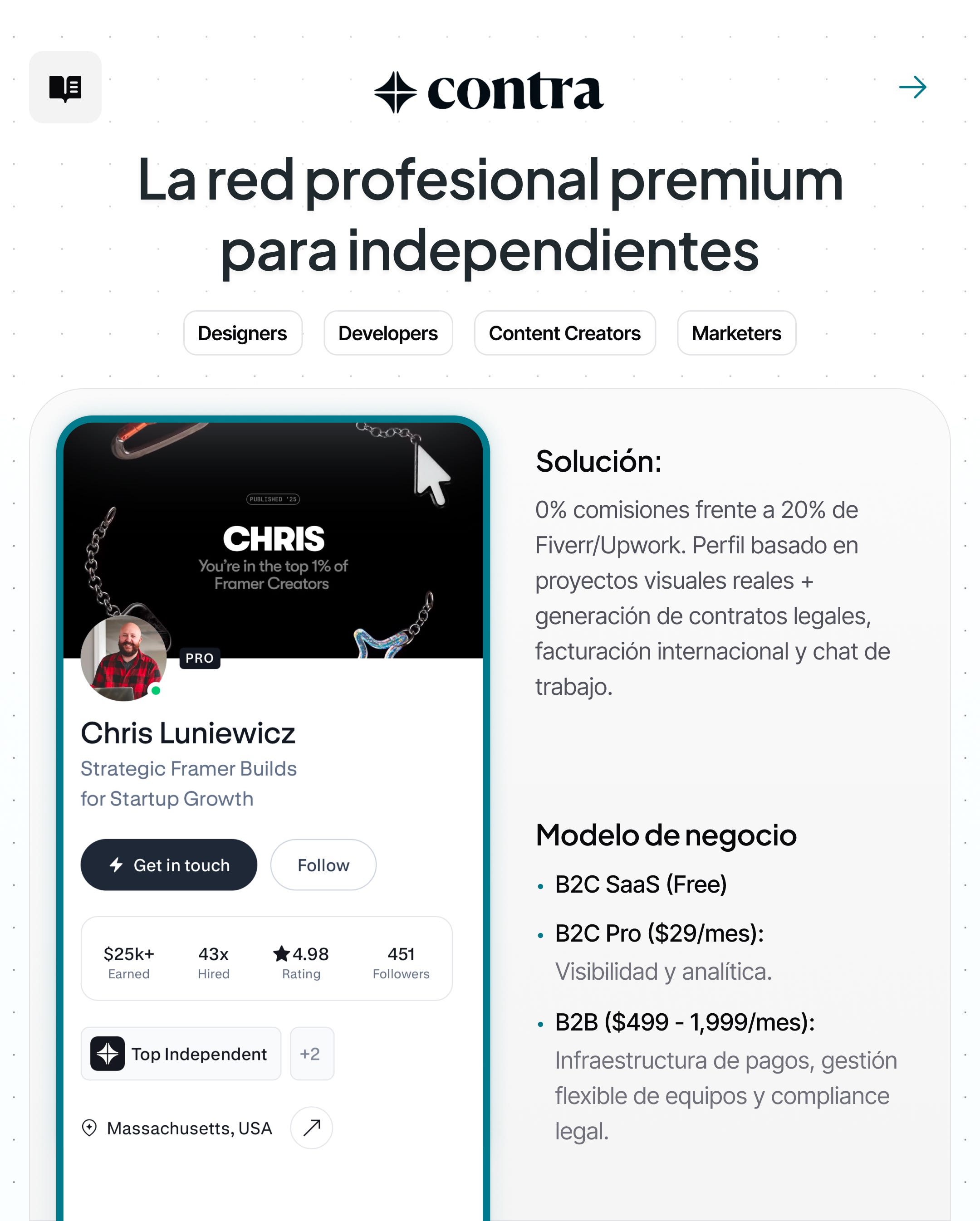
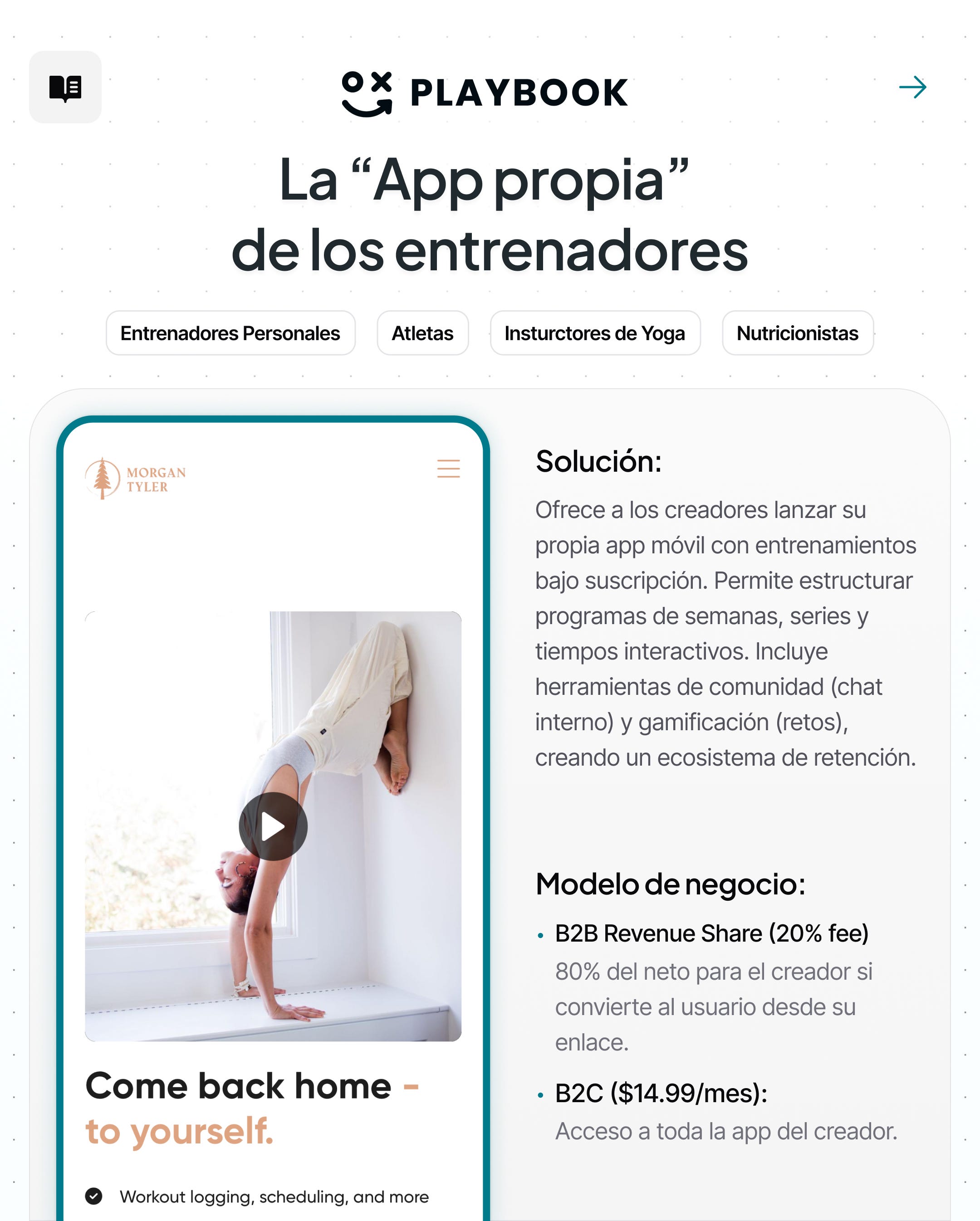
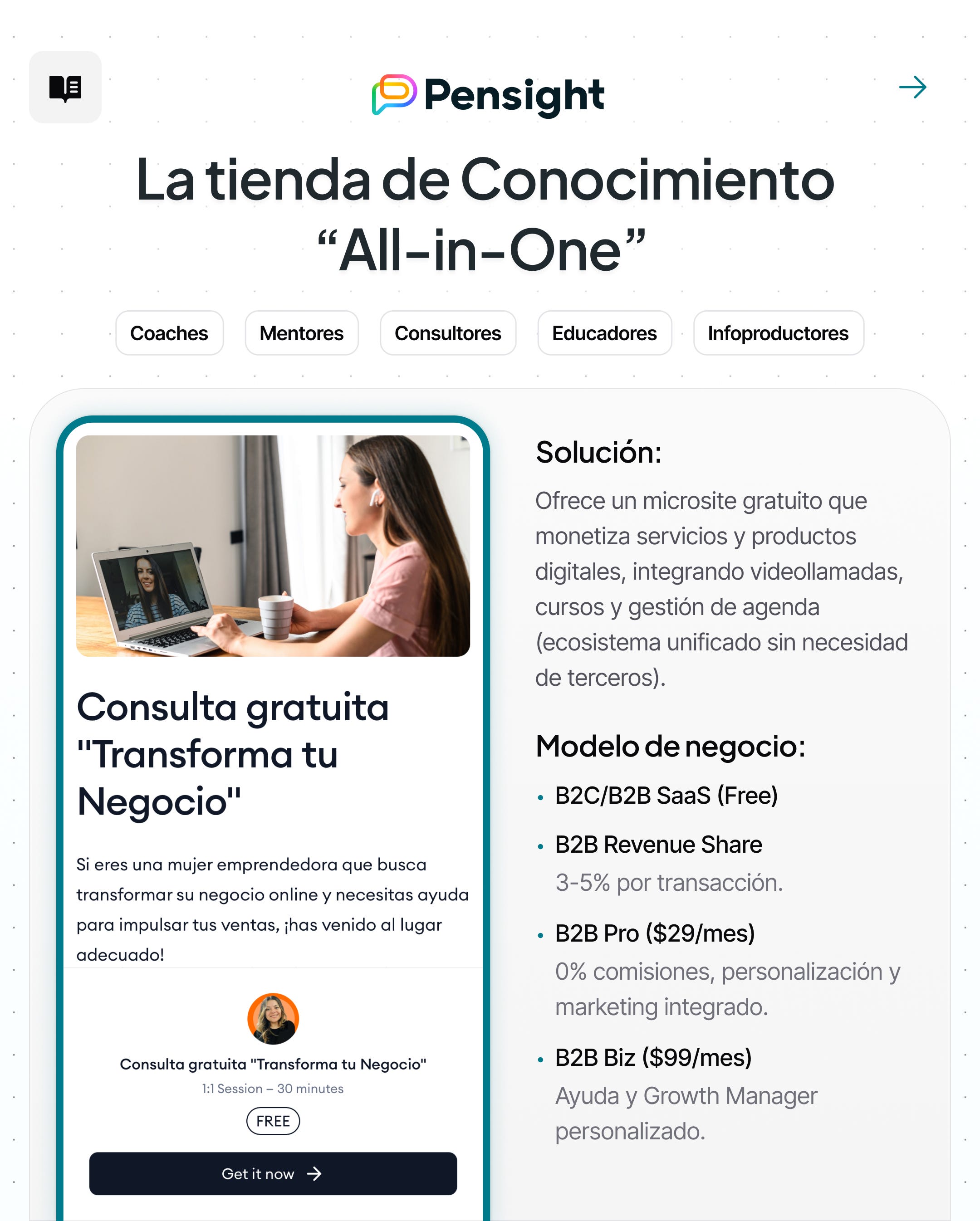
For digital freelancers, Contra stands out from Upwork-type solutions by not charging talent any commission (0%), letting the freelancer use their profile as their primary identity without fear of losing income. Playbook lets trainers launch their own mobile App without knowing how to code, monetising their Instagram audience directly. Pensight unifies the creator’s entire offering (courses, mentoring, digital products) in a single link, allowing a coach to run their whole business from their TikTok or Instagram profile without a traditional website.
In these examples, the vertical social network component fades: the first two are more horizontal (digital freelancers in general, fitness in a broad sense), and only Gronda has a discovery marketplace. Pensight and Playbook lack their own marketplace/community, their solution being aimed almost entirely at external discovery via generalist horizontal networks.
3. The counter-example: booking engines
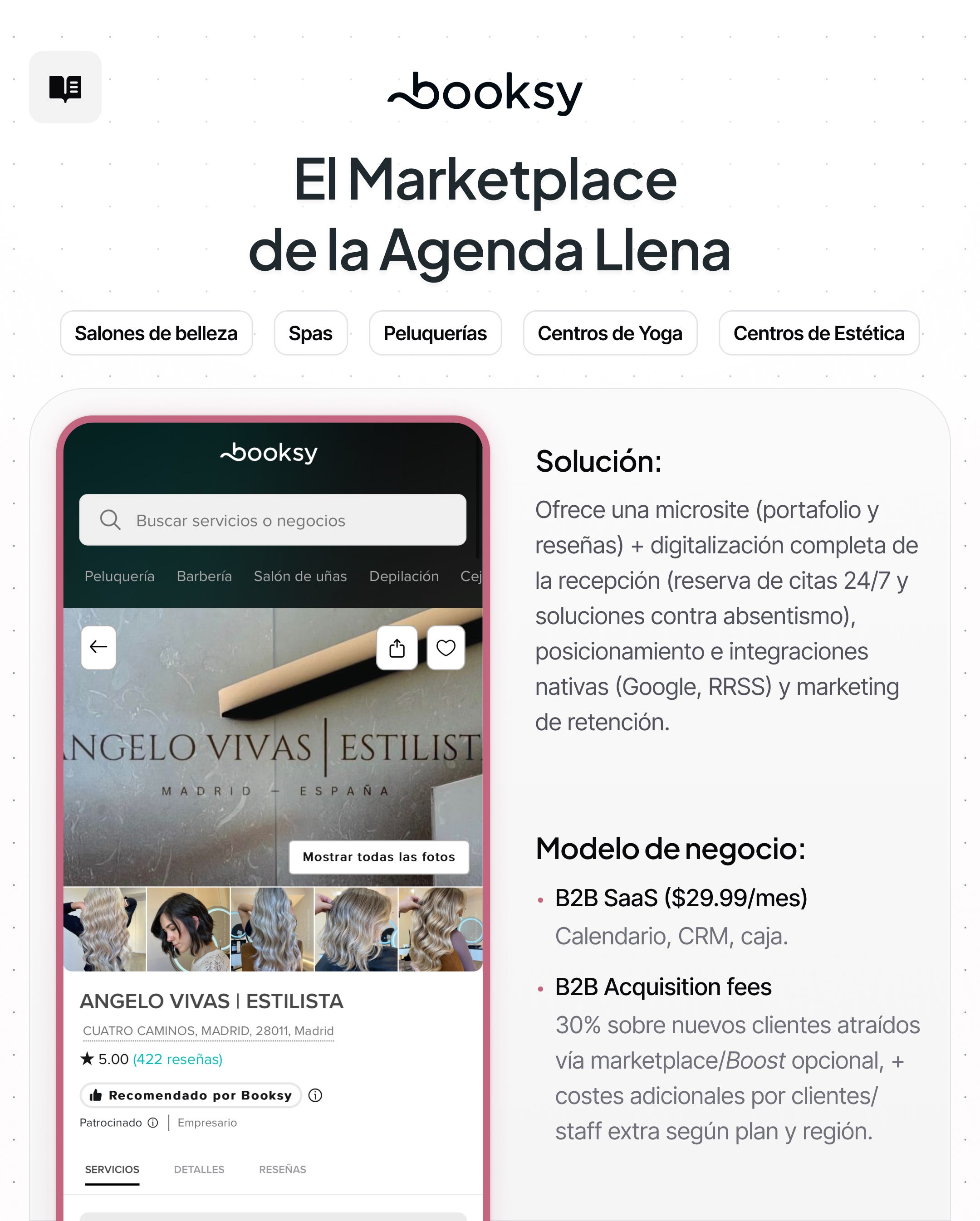
A third example consists of models that themselves serve as a counter-argument to the structural weight of the link-in-bio. In markets where the local component dominates, such as those related to body and beauty, the growth strategy depends less on social networks and more on SEO. The flip side is that, unlike most of the previous models, they offer solutions for businesses without their own audience.
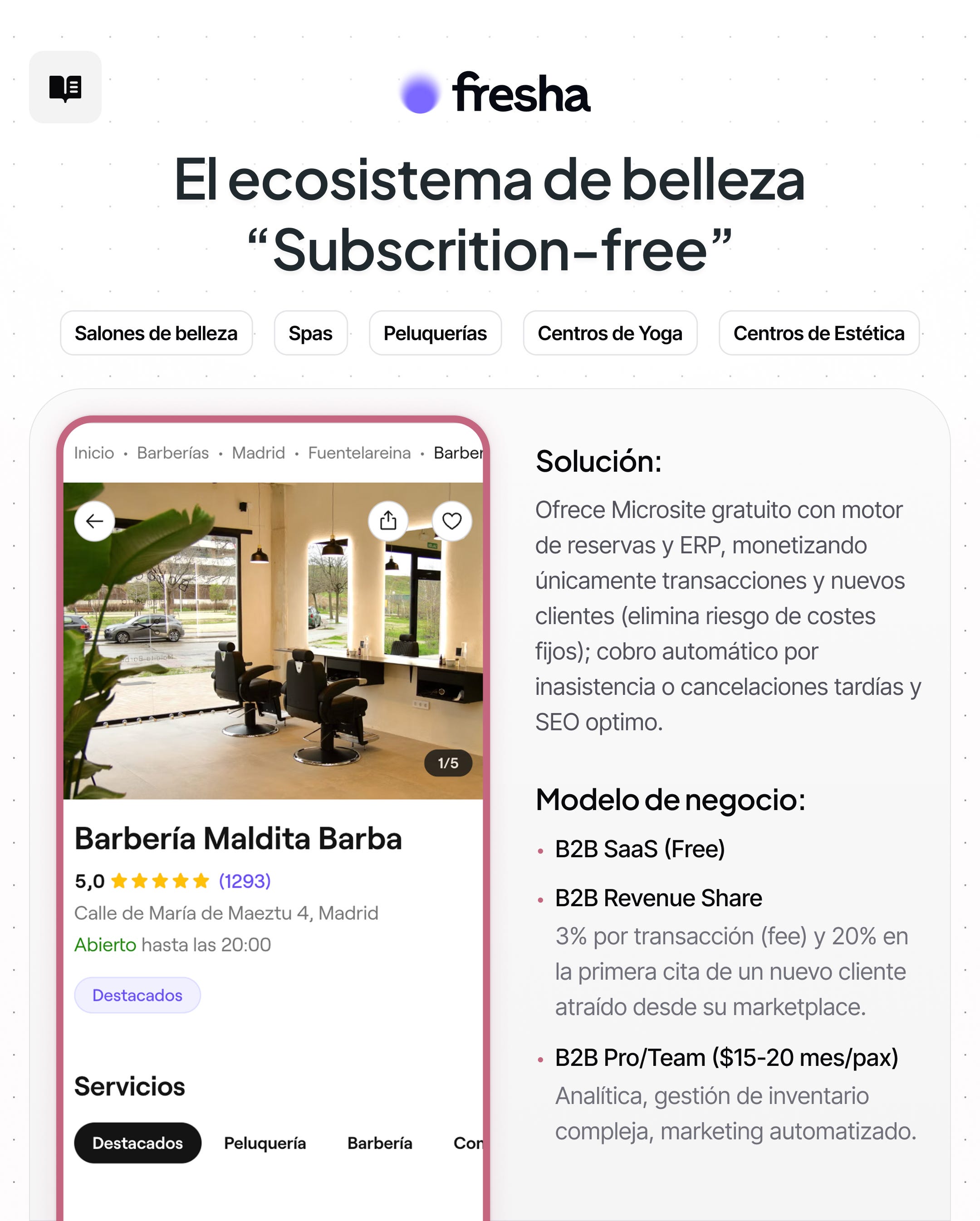
Booksy, as the best-known example, charges a fixed subscription (with no mandatory per-transaction commissions) in exchange for being a sales catalyst, as well as software (SaaS) to manage your salon and avoid no-shows. It has its own discovery marketplace, offering a public microsite for the client (visibility + channelling of operations), but traffic comes primarily via Google. In the same niche, Fresha gives away the SaaS software but charges a 20% commission on new clients that come through its marketplace (+ smaller payment-processing fees).
Although these businesses don’t depend on a CLG model, they use the link-in-bio to improve client quality and reduce operational friction. The truth is that users who book from Instagram or from the professional’s profile are cheaper and more loyal. In fact, Booksy’s data says that clients who self-manage (who book on their own through the profile) book 20–30% more.
The myth of “direct traffic”
If you open SimilarWeb and take a look at Behance or Houzz, you’ll see their social traffic is extremely low (less than 4% on Behance and 1.4% on Houzz), while most traffic is direct. However, much of that “direct” traffic is actually dark traffic (clicks from bios, DMs or emails), or corresponds to recurring logged-in users.
The important value these figures don’t reflect is that the first contact is usually social, even if later visits show up as direct. Moreover, search traffic tends to convert worse: high volume, low intent. Traffic arriving from authoritative social network profiles converts better.
Scott Belsky, the founder of Behance, has said it many times: the key isn’t volume, it’s quality. Even though Behance gets a lot of traffic from Google Images, that traffic tends to be “tourist” traffic (low conversion). In contrast, traffic coming from social networks—from sharing projects—has infinitely higher engagement and quality.
Valentin Schütz, the founder of Gronda, explains that at first they tried to be a traditional job board but failed, and that growth took off (they tripled members in 2022) only when they pivoted toward the community strategy. They understood that chefs wanted to “commercialise their skills” (recipes, masterclasses) outside the restaurant. Growth went viral because it was based on “healthy professional envy”: if one chef shared an incredible technical recipe in their bio, other chefs followed. It’s pure organic growth born of content, not ads.
For platforms like Playbook or Contra, the social bet is total. They are pure Creator-Led Growth. Their strategy depends entirely on the creator using their influence to bring in their own audience: Playbook is devoted to educating its trainers on how to optimise their funnel and their bio link; Contra reinforces this with its “0% commission” model (by not charging per transaction, they incentivise the freelancer to use their Contra profile as their primary identity everywhere).
Conclusion
For years, the dominant narrative has been that building a mass-market B2C was almost impossible, or only within reach of those who could burn millions on marketing. The reality shown by the models that have internalised creator-led distribution—and more specifically, Creator-Led Growth—is different: growth can be organic if you align product, user and distribution.
The link-in-bio hasn’t changed the rules of the game; it has only made clear who controls each part of the board. While Instagram and TikTok remain the discovery storefront (frontend), vertical networks act as the engine where that attention is validated and turned into business (backend).
The case of Gronda, Contra, Playbook, Pensight and Prozis shows that the future of Vertical B2B2C/B2C is not the abandonment of generalist social networks, but their instrumentalisation. So far, the welding point between the universe of the horizontal network and the ecosystem of the vertical platform is that humble “micro-site” hosted in the bio link. There, in that click, is where much of the economics of these businesses resides.